Game Theory Explains Some Viral Content →
The authors of this paper conclude that the qualities which make things like diseases into epidemics are actually the opposite of the qualities that make social and peer-related ideas into phenomena. An epidemic spreads widely if people travel long distances and infect new people, in essence, if they have a high number of interactions and contact with others. An idea can actually spread better with fewer interactions and contacts; the more friends you have, the less likely any one idea will become popular among all of them, thus influencing your opinions strongly.
Microsoft vs. Software Piracy →
Microsoft spends "north of $10 million" a year on its intelligence-gathering operations and an estimated $200 million on developing anti-piracy technology.It also spends about $50 million a year going after counterfeiters. Still just a drop in the bucket compared to a $3 billion quarter. Great article.
Microsoft CEO sells $1.3B of shares →
This comes a week after he sat in the our cafeteria and said he "wasn't concerned about the stock price" and "still had all my shares".
Everest Summit Wired Up With Internet →
I'm pretty cynical about technology in nature, but it would be pretty cool to make a video call from the top of Mount Everest.
Final Nail in Coffin for Net Neutrality? →
Before Tuesday's midterm elections, there were 95 House and Senate candidates who pledged support for Net neutrality, a bill that would force Internet providers to not charge users more for certain kinds of Web content.While I don't believe it's dead, it's not going to happen anytime soon. Unfortunately, this is one of the few issues on which I disagree with the Republican party.
All of them lost -- and that could mean the contentious proposal may now be all but dead.

Boring friends.
Republican Christine O'Donnell sounded a defiant tone the day after losing her Delaware Senate bid to Democrat Chris Coons, calling her loss a "symptom of Republican cannibalism."
So she's a cannibal, not a witch? Or she's a witch that ran for the cannibal party?
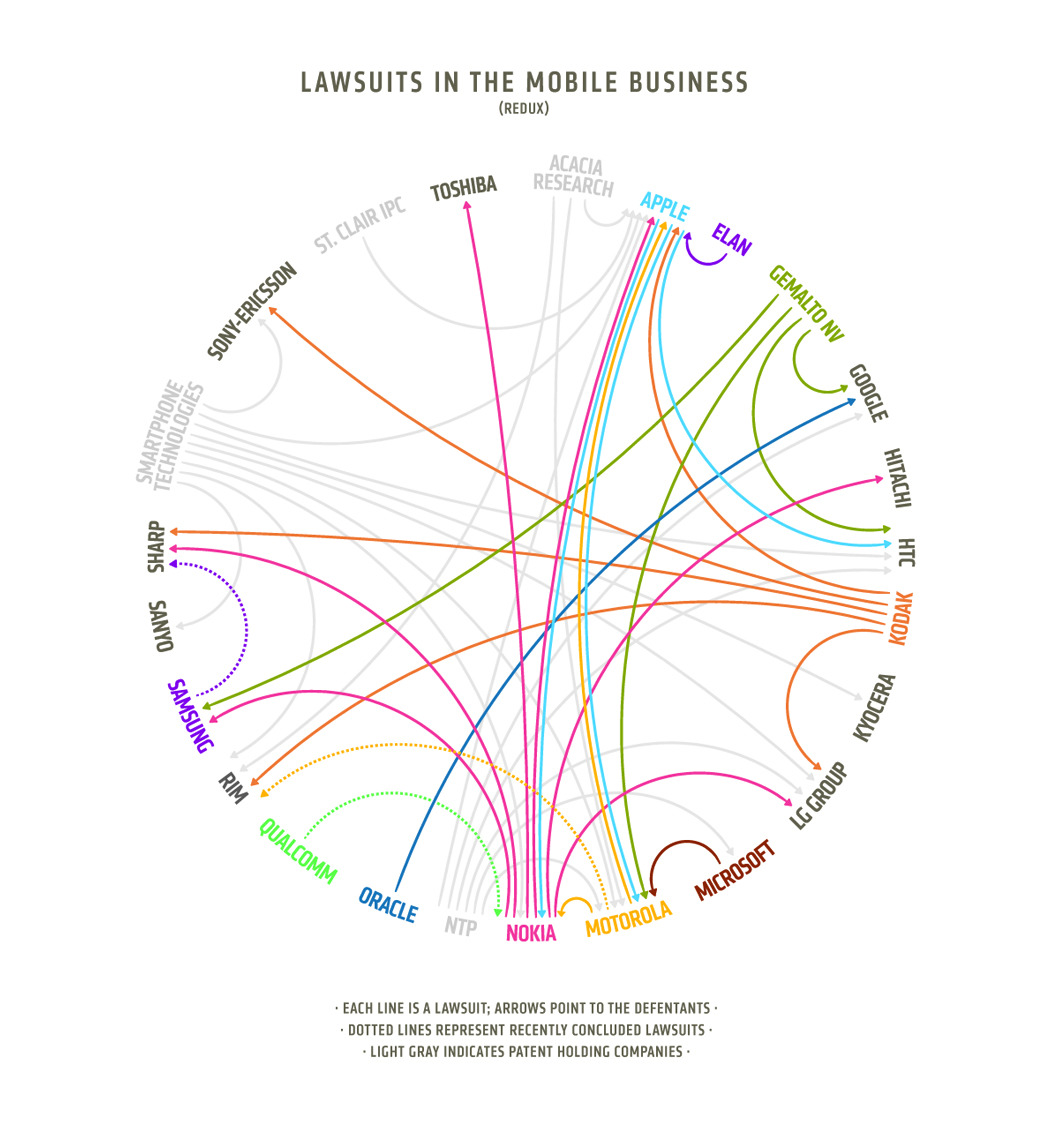
With all the lawsuits piling up over the past month, I felt a revision of this graphic was needed. In this update I also included patent holding companies.
I think the only way this could get more interesting if I actually held patents on any of this.
Holograms meet Ethernet in New Display Technology →
Still not Star Wars, but we're getting there. We're at least in single digit seconds per frame.
What do we want? Incremental change for the betterment of society! When do we want it? As soon as is reasonably practical.