Parity (or Skype 5 for Mac) →
More than once, a Windows user walked by my Mac, saw my version of Skype, and said something to the effect of «wow, this looks so much better than the horrible mess we have on Windows!» It seems Skype has noticed that there is a discrepancy in quality between the two versions, and has decided to make the two versions more similar to each other. Unfortunately, instead of making the Windows version of Skype better, they've decided to fix the discrepancy by making the Mac version of Skype more like the Windows version.And the Windows version is ugly and has a poor interface design. I reverted about as fast as I could.
DOA: PlayBook to Ship Without Mail, Messaging, Contacts →
Speaking of RIM...
There is No Future, and RIM's Dreaming →
A dominant product, which drives a company's profitability and makes them very, very successful, can also quickly become the very thing which destroys the company.There's been a lot of great stuff on RIM recently. To find it all, you basically just need to read this article, the article this article links to, and all the articles that article links to.
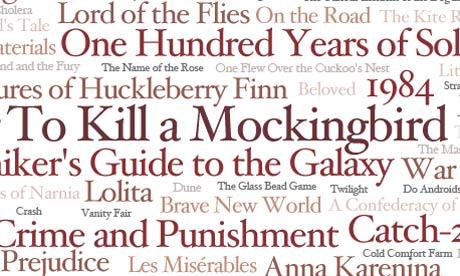
100 Books Everyone Must Read
Does having watched the Wishbone episode count?
How the Internet Gets Inside Us →
The New Yorker looks at three viewpoints of technology:
The Never-Betters believe that we're on the brink of a new utopia, where information will be free and democratic, news will be made from the bottom up, love will reign, and cookies will bake themselves. The Better-Nevers think that we would have been better off if the whole thing had never happened, that the world that is coming to an end is superior to the one that is taking its place, and that, at a minimum, books and magazines create private space for minds in ways that twenty-second bursts of information don't. The Ever-Wasers insist that at any moment in modernity something like this is going on, and that a new way of organizing data and connecting users is always thrilling to some and chilling to others—that something like this is going on is exactly what makes it a modern moment.
My favorite quote, however, has to be this one:
At any given moment, our most complicated machine will be taken as a model of human intelligence, and whatever media kids favor will be identified as the cause of our stupidity.
Bonus points for the LotR reference at the end...
MIT Creates the World's First Feasible 'Artificial Leaf' →
Today at the National Meeting of the American Chemical Society, researchers from MIT's Nocera Lab, led by Dr. Daniel Nocera, claimed that they've created an artificial leaf made from stable and--more importantly--inexpensive materials.They claim it performs photosynthesis 10 times more efficiently than the real thing.
Tom Clancy books inspired by Computer Science
- Load Balancer
- The Edge Case
- Denial of Service
- The End User
- Greater or Less Than Zero
- The Concrete Superclass
- The Spaghetti Code (released under a pseudonym in 2004, to harsh reviews)
- Slab Allocator
- Greedy Algorithm
- The Cardinal of the Kremlin (due to a misunderstanding)
- Colonel Panic (also misheard)
Entrepreneurship in China →
China's state-controlled entities are not particularly profitable. A study by Qiao Liu, a professor at the University of Hong Kong, concludes that the average return on equity for companies wholly or partly owned by the state is barely 4%, despite the benefit of cheap leverage provided by government-controlled banks. According to a recently published paper by Mr Liu and a colleague, Alan Siu, the returns of unlisted private firms are no less than ten percentage points higher.
Capitalism wins again...
A Letter to Jon Bon Jovi (What's Really "Killing The Music Business") →
Steve Jobs isn't the problem here. The music industry is the problem—too many bad songs are the problem.
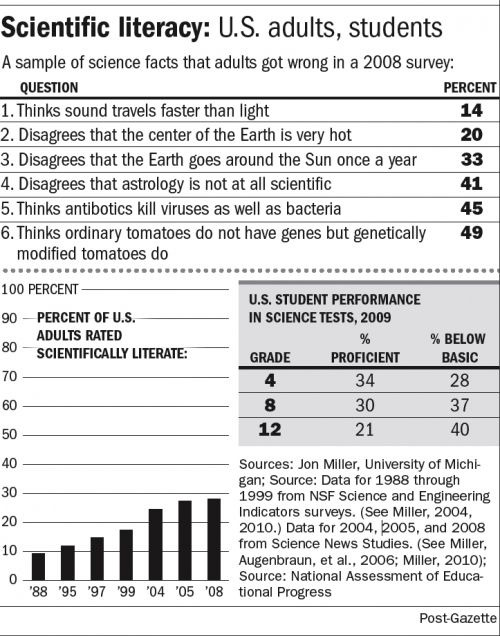
How sad...