Microsoft's Kinect Designed to Survive Drops, Zaps →
Even after being dropped on concrete, a typical Microsoft Kinect's sensors won't even move a millimeter. Or a micron, Microsoft representatives said Thursday night.
KinectFusion HQ →
There are so many cool things you can do with Kinect! This one's an official research project from Microsoft that takes live depth data from a moving depth camera and in real-time creates high-quality 3D models. The sensor data can be texture-mapped, used for multi-touch on arbitrary surfaces, or used in augmented reality or physics simulations. The best part is the 1mm deep DELL logo it catches and recreates on the back of the monitor.
With the Bing Search Engine, Microsoft Plays the Underdog →
Microsoft's assault on Google in Internet search and search advertising may be the steepest competitive challenge in business today. It is certainly among the most costly. Trying to go head-to-head with Google costs Microsoft upward of $5 billion a year, industry executives and analysts estimate.Bing is picking up steam, however, handling 14% of Internet searches (30% counting Yahoo), increasing its ad click share to 24%, signing deals with Facebook and Twitter, and showing increased integration across Microsoft products such as Windows Phone and XBox 360. Lots of interviews with interesting people help present the challenges, successes, and plans for Bing's future.
A Billion Dollars Isn't Cool. You Know What's Cool? Basic Human Decency →
And therein lies the real problem of web 2.0 — whether it takes the form of SEO-driven "news" or crowd-sourced accommodation. To make money — real money — at this game you have to attract millions, or tens of millions, of users. And when you're dealing with those kinds of numbers, it's literally impossible not to treat your users as pieces of data. It's ironic, but depressingly unsurprising, that web 2.0 is using faux socialization and democratization to create a world where everyone is reduced to a number on a spreadsheet.
Bottlenecks in the Brain Limit Our Ability to Multitask →
I love cognitive psychology:
Researchers previously thought that different processes in the brain were subject to separate bottlenecks. For example, the process of reading a map might be limited by a very different mechanism than the act of evaluating ideas and forming opinions. However, new research in PNAS suggests that a "unified" bottleneck may restrict our ability to perform very different cognitive processes simultaneously.
Bad Luck? Bad Faith? →
Obama has not shown strong leadership or powerful ideas, yet slanders the Republicans for their ideological stances in the debt debates and blames the lack of economic recovery on "bad luck".
Report: Google Uses About 900,000 Servers →
That's a lot of servers, but surprisingly not a lot of power, if accurate:
"Google's data center electricity use is about 0.01% of total worldwide electricity use and less than 1 percent of global data center electricity use in 2010," Koomey writes, while cautioning that his numbers represent educated guesses extrapolated from the company's information.
Facebook's Design Strategy: A Status Update →

Inside the Analog Design Lab at Facebook, which is rapidly acquiring some of the best graphic and web designers and design companies in the country.
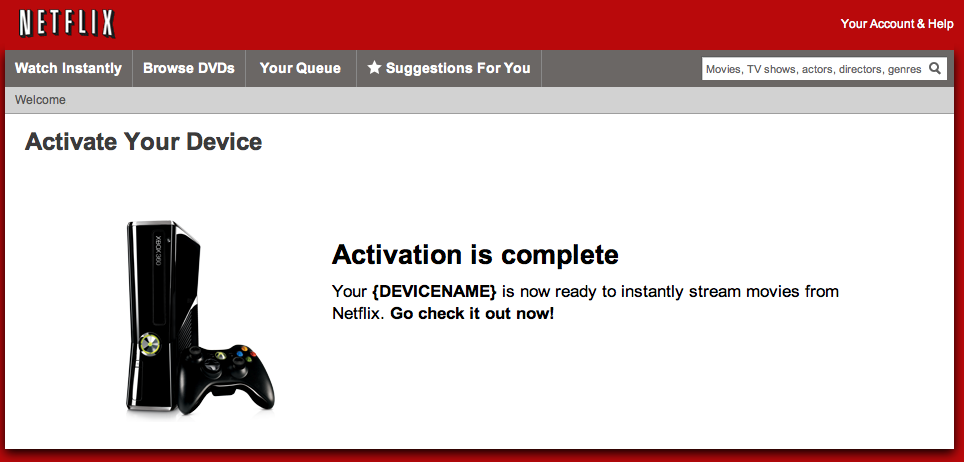
So close, Netflix, so close.
The Patent System Isn't Broken — We Are →
By that I mean all of us: the companies and people who directly interact with the patent system, the media that reports on those interactions, the analysts and experts who inform the media, and finally the large, active, and vocal readership that we try and service with our reporting. As a group, we have accepted and let lie the lazy conventional wisdom that the patent system is broken beyond repair, a relic of a previous time that has been obsoleted by the rapid pace of technical innovation, particularly in software, and that it should perhaps be scrapped altogether.That's what's been missing from this whole conversation (really more shouting and whining than anything, actually). Short of throwing out the patent system that has actually worked fairly well for the last 200 years, how do we reform what is patentable software, how does one patent it, and how long is it protected for?
So let's start over, shall we? Let's actually look at how the patent system works, where it's specifically malfunctioning, and how we can fix it.